Strengthen confidence in your products and your brand. With independent certification or verification by SGS, you can enhance transparency, build credibility, and gain a decisive competitive advantage in the marketplace.
Why SGS Green Marks?
In recent years, numerous voluntary ecolabeling schemes have emerged in response to the growing demand for more sustainable products and services. Environmental claims such as “recyclable,” “carbon neutral,” “eco-friendly,” or “sustainable” are widely used in advertising and marketing communications.
At the same time, regulatory requirements for environmental and sustainability claims are becoming increasingly stringent. With the Empowering Consumers for the Green Transition Directive (EmpCo), stricter rules for communicating environmental claims (Green Claims) will apply in the European Union from 27 September 2026. The aim is to prevent greenwashing and to provide consumers with more reliable information about the environmental impacts of products. Companies will be required to clearly substantiate their environmental claims and demonstrate the evidence on which they are based.
As a result, independent certification and verification are becoming increasingly important. Voluntary environmental and sustainability labels will be required to be either established by public authorities or based on a certification system involving independent third-party assessment.
SGS Green Marks help companies demonstrate the environmental attributes of their products in a transparent, credible, and verifiable way.
Self-created sustainability labels that do not satisfy these requirements may not be used in business-to-consumer (B2C) communications. This should be distinguished from specific environmental claims, which companies may continue to make on their own, provided that such claims are clear, accurate, and substantiated by adequate supporting evidence.
Our independent assessment scheme is based on recognized standards, such as ISO 17065, ISO 17029, ISO 14065, and ISO 14021. It confirms that your product meets the defined requirements.
All assessment protocols are based on a clearly defined product scope and transparent certification and verification criteria. This ensures that the basis of each environmental claim is clear, traceable, and understandable.
As each SGS Green Mark represents a single environmental attribute, you can communicate your product’s positive environmental characteristics clearly, transparently and credibly, while using them effectively in your marketing communications.
Explore SGS Green Marks
Product Carbon Footprint
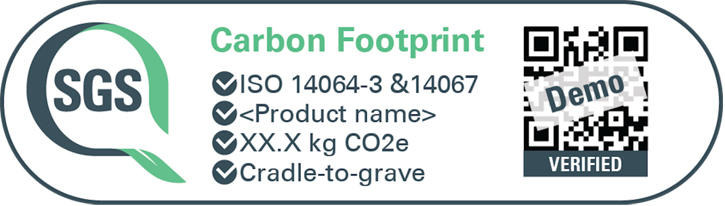
The Green Mark “Carbon Footprint” communicates the Product Carbon Footprint (PCF), expressed in carbon dioxide equivalent (CO₂e) per product, unit, or mass – relating to the greenhouse gas emissions and removals associated with a product throughout its defined life cycle.
- Transparent communication of greenhouse gas (GHG) emissions across the entire product life cycle.
- Measurement of greenhouse gas emissions is an essential first step in reducing a product’s climate impact. The assessment provides the foundation for identifying and implementing improvements.
Example products: Sports equipment, footwear, office chairs
Carbon Footprint Reduced
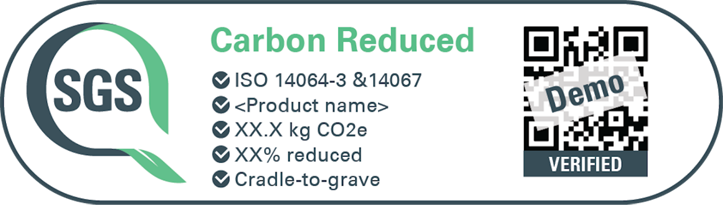
The Green Mark “Carbon Reduced” displays a reduction in the Product Carbon Footprint (PCF), expressed both as an absolute value and as a percentage compared with the previous assessment.
- Transparent communication of current greenhouse gas (GHG) emissions across the entire product life cycle, together with the percentage reduction in CO₂ emissions compared with a previous product version or production method.
- Demonstrates the implementation of measures to reduce the product’s climate impact and provides transparent, verifiable evidence of the improvements achieved.
Example products: Sports equipment, footwear, drinking glasses
Recycled Content

The Green Mark "Recycled Content” displays the percentage of certified recycled content (minimum 5%) assessed in accordance with ISO 14021 or EN 15343.
- Requirements for a minimum percentage recycled content in packaging and products are increasing continuously.
- Retailers and brand owners are increasing the recycled content of their products to meet their climate targets and commitments to carbon neutrality.
Example products: Plastic packaging, textiles and apparel, plastic toys, and other plastic products
Recycled Content Requirements Summary – Download the PDF
No PFAS Detected
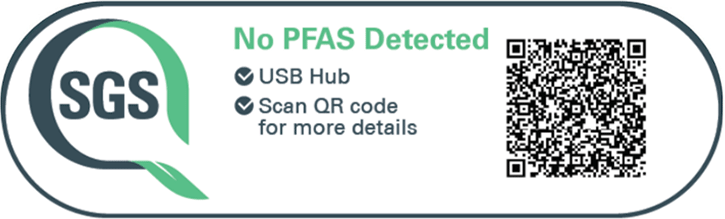
The Green Mark “No PFAS Detected” (formerly “PFAS Screened”) has been renamed to more clearly communicate that no detectable PFAS were found based on laboratory test results.
It indicates that the product or material meets the defined criteria for the non-detection of selected per- and polyfluoroalkyl substances (PFAS). The selection of PFAS tested is based on market requirements, known applications and regulatory requirements. This Green Mark is not applicable to fluoropolymers.
- Highlights the improved chemistry of a product or packaging.
- Reflects the cross-industry trend toward eliminating PFAS ("forever chemicals") from products and packaging.
Example products: Non-stick cookware, water-repellent apparel, food-contact packaging
Biobased
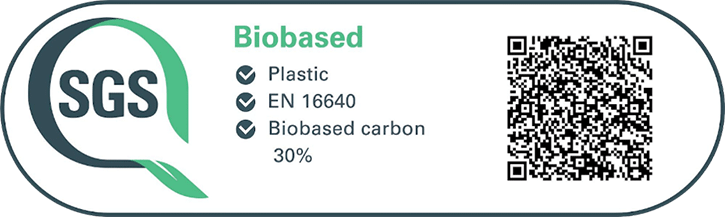
The Green Mark "Biobased” identifies materials with a total carbon content of at least 30% (based on dry mass). It indicates the percentage of biobased carbon content once a minimum of 20% biobased carbon is met.
- Supports the transition from petroleum-based to biobased materials by providing transparent information on biobased content.
- Helps to show that companies increase the proportion of biobased materials used in their products.
Example product: Biobased plastic toys
Hazardous Substances Assessed (HSA)
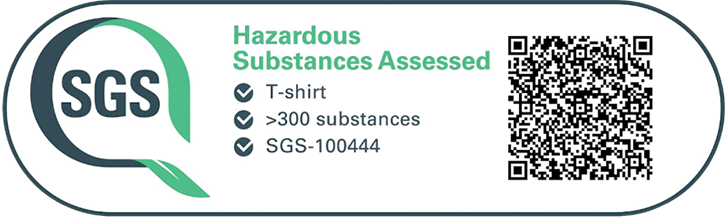
The Green Mark “Hazardous Substances Assessed” identifies products that meet specific criteria for more than 200 environmentally hazardous substances of concern.
- Demonstrates that less hazardous substances have been selected in the product’s material and chemical composition.
- Reflects the growing trend toward eliminating or reducing the use of problematic, toxic or bio-accumulative chemicals in products.
Example product: Polyester/cotton shirts
PVC Free
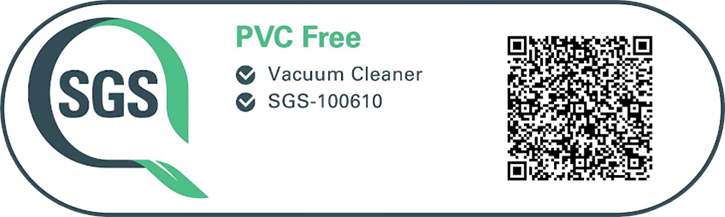
The Green Mark “PVC Free” identifies products that have been assessed in accordance with the SGS PVC free testing protocol. Compliance is verified by determining the total chlorine content and/or analyzing the PVC content to demonstrate the absence of PVC.
- Demonstrates that companies have worked to phase out PVC in packaging, to avoid recycling stream contamination.
- Addresses environmental concerns associated with vinyl chloride, the raw material used in the production of PVC.
Example product: Data cables (jacketing material)
Industrial Compostable
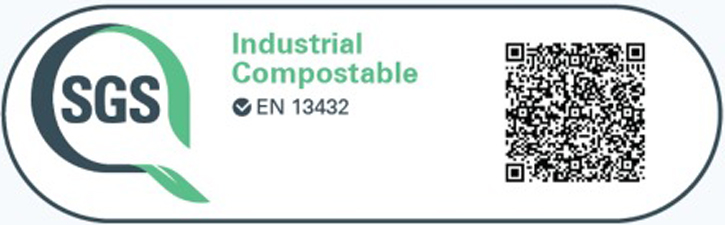
The Green Mark “Industrial Compostable” confirms that the percentage of aerobic biodegradability exceeds 90% within a test period of no more than six months, and unproven constituents do not exceed 5%.
- Demonstrates that companies have made commitments to make packaging recyclable, reusable or industrially compostable.
- Reflects the growing trend toward expanding industrial composting infrastructure and programs, particularly in the United States.
Example product: Compostable single-use food service ware
Biodegradability
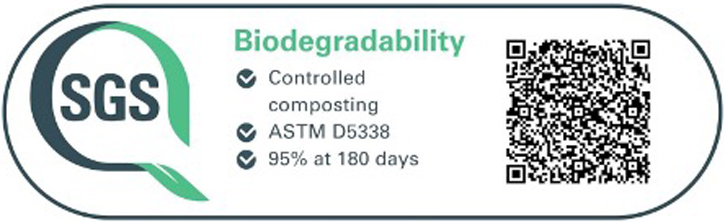
The Green Mark “Biodegradability” confirms that the material achieves a biodegradation rate of at least 60% within a maximum period of 180 days. It also indicates the measured degree of biodegradability as a percentage.
- Suitable for applications and regions where biodegradability is aligned with the product’s intended use and appropriate end-of-life disposal.
- Can help reduce the amount of waste sent to landfills or remaining in the environment.
Example product: Biodegradable flower pots.
What Are the Benefits of SGS Green Marks?
Products that have been certified or verified under our program are awarded an SGS Green Mark, a globally recognized label that demonstrates independent validation of environmental claims.
SGS Green Marks can be displayed on products, packaging, and marketing materials, providing consumers with clear and credible evidence that the respective environmental claim has been independently certified or verified by SGS.
Each SGS Green Mark features a QR code that allows consumers to verify the authenticity of the label and the underlying environmental claim. The QR code also provides access to a concise summary containing the key information about the relevant certification or verification.
Your benefits at a glance
- Independent third-party validation of product-specific environmental claims
- Enhanced credibility with customers and business partners
- Reduced risk of greenwashing through transparent and verifiable evidence
- Clear differentiation of your products from competing products
- Demonstrates your commitment to ESG (Environmental, Social and Governance) principles and your leadership in the development of more sustainable products
- Improved access to new customer segments and markets
- Strengthens your brand and corporate reputation
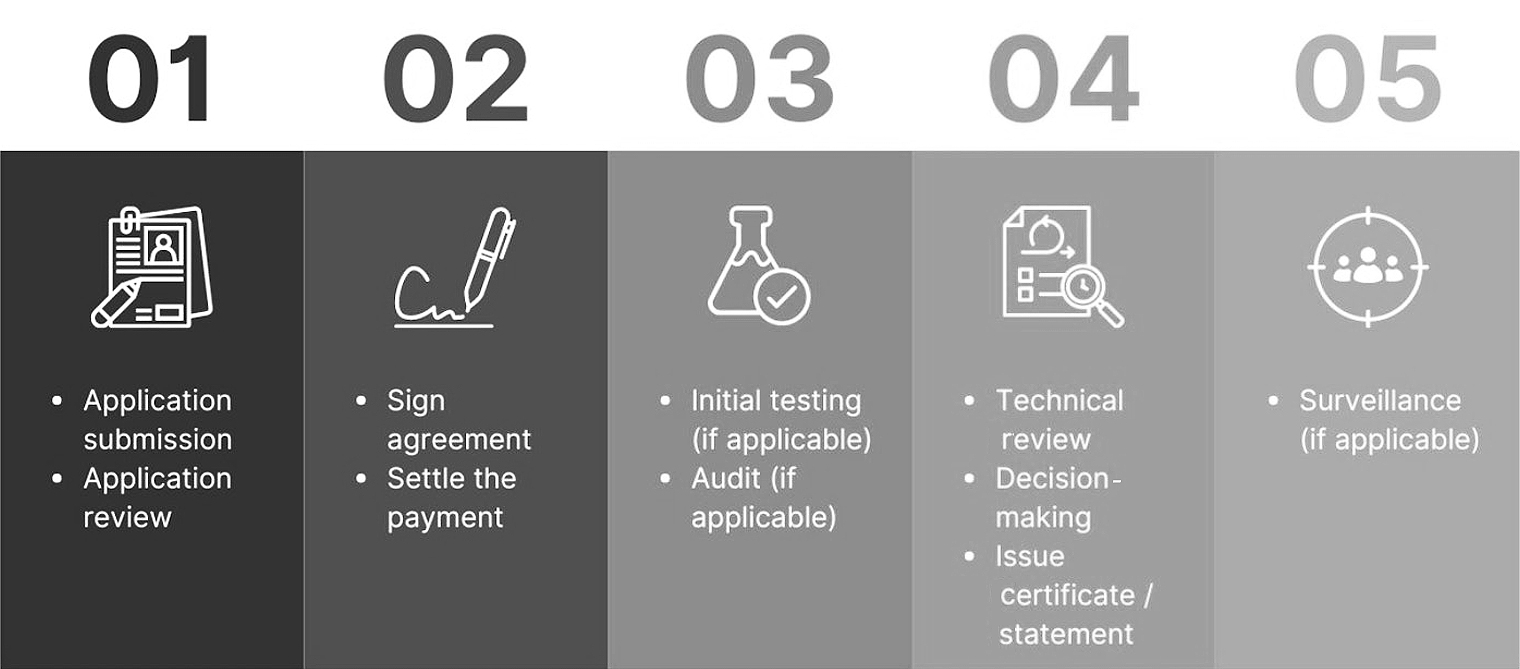
The certification process:
Contact
Matthias Schädl
t: +49 89 78 74 75-103
E-Mail:
Markus Spiel
t: +49 89 78 74 75-130
E-Mail:
Customer Service Team
t: +49 89 78 74 75-222
E-Mail:
Disclaimer
The SGS Environmental Claim Certification/Verification Scheme, commonly known as SGS green marks, represents a portfolio of specialized certification and verification services, each designed to indicate a specific environmental attribute. Each mark has a clearly defined scope and limits and is granted only after a rigorous, pre-defined assessment process. This process may include testing against relevant standards, risk assessments and ongoing audits at set intervals. SGS green marks signify the precise, targeted evaluations for the attributes outlined by the green marks pictured above.
SGS continuously monitors the use of SGS green marks to prevent misuse, such as deceptive trade practices, fraud and false advertising. While third-party certification offers assurance, product owners remain responsible for all claims and must not mislead consumers or make false marketing claims.
All claims must respect the following principles:
- Claims must be clear and unambiguous
- Claims must be truthful and accurate
- Claims must not omit or hide important relevant information
- Comparisons must be fair and meaningful
- Claims must be substantiated
SGS green marks align with the requirements of the European Union’s Green Claim Directive, the U.S. Federal Trade Commission (FTC), international standards such as ISO 14021, and industry best practice. The FTC mandates that third-party certification marks must not imply general environmental benefits or be misleading. Product owners should maintain records to substantiate any claims made through certification and must use clear, prominent qualifying language to indicate that the certification pertains only to the specific environmental attribute.
SGS green marks are additional to country- and market-specific requirements. Individual countries and trading blocs may have restrictions on labeling or additional labeling requirements for specific claims, so product owners and manufacturers should ensure that all legal requirements are met.